What’s the deal with the “WDS Moose?”
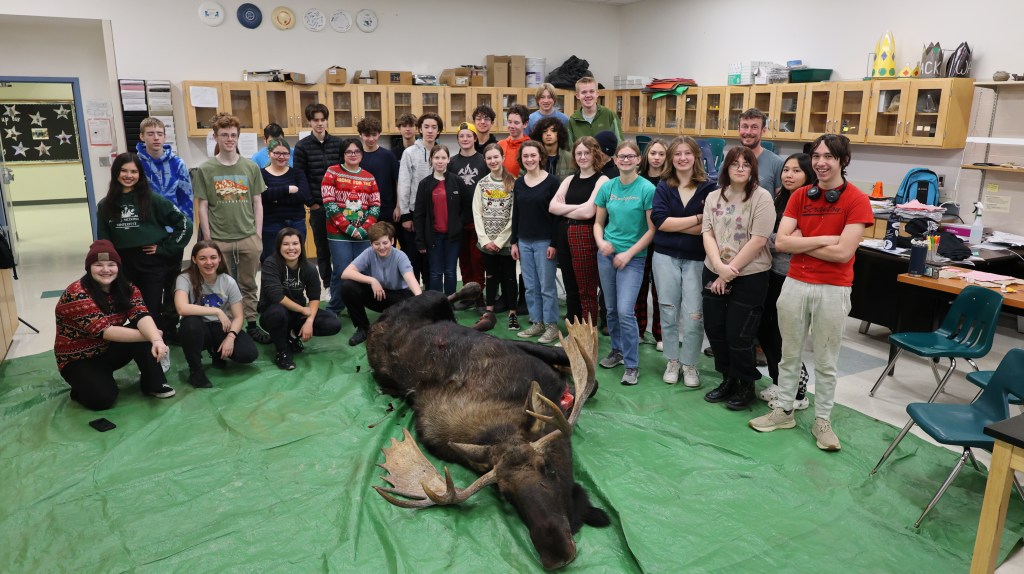
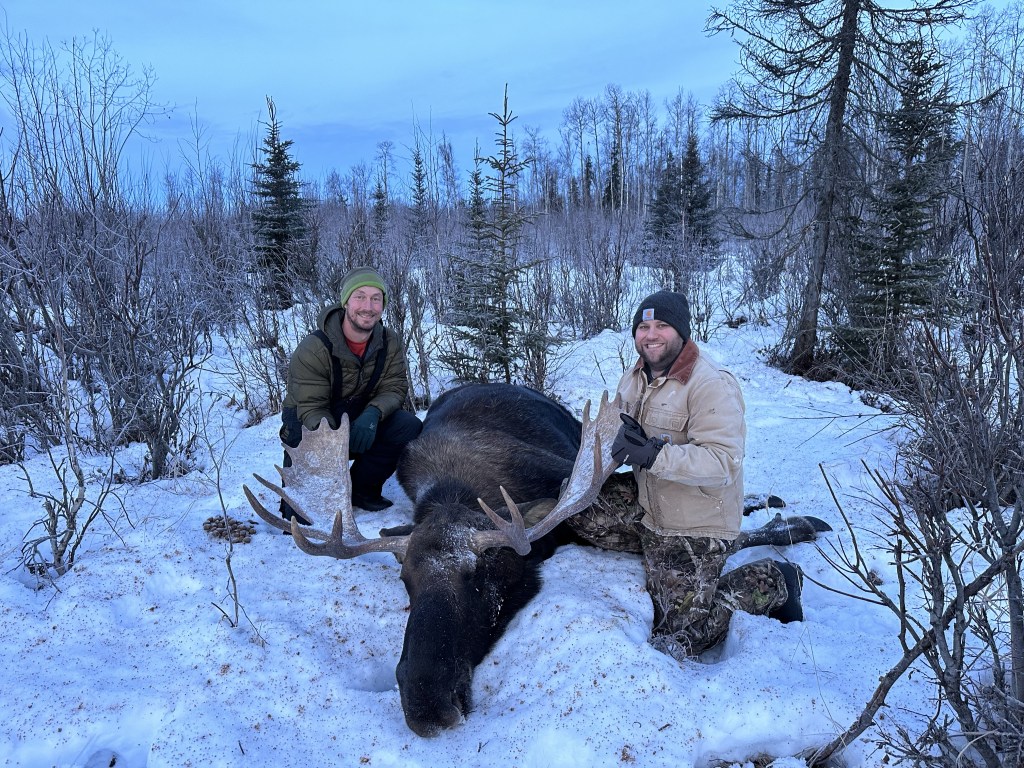
The whole moose “thing” began a few years ago when WDS Biology teacher Brian Mason first applied for an educational harvest permit with the Alaska Department of Fish and Game. This allows him to go out and harvest a moose with the goal of bringing it back into the classroom full a full processing by the students. This aligns with the anatomy unit of biology and with the Alaska studies curriculum, which WDS freshmen partake in about every other year: Brian has been successful in harvesting a moose in 2019, 2021, and 2023.
Questions & Answers
Do you get a moose every year? No. We’ve been lucky to harvest three moose in the last six years. The freshman class always get to help process it, but for years where we aren’t able to harvest one, those students often help out the following year when we do get one. Our program also has most of the exchange students at Chugiak, so we always try to get them in on this very Alaskan experience when we can!
What happens to the meat? Students who help process get to take a pound of meat home to their families. The rest is packaged and delivered to families in need and other local food bank organizations. The student government provides a chest freezer for this purpose each time a moose is harvested.
Why don’t you call this a ‘dissection’? There are many parts of this that look like a typical biology dissection, but many more parts that do not. For example, a native elder doesn’t usually come in to celebrate the life and sacrifice of a frog on a dissection plate. Learning how to dissect a fetal pig doesn’t really teach students how to process their own meat someday as part of subsistence living. Additionally, a dissection usually indicates that the number one goal is to learn the anatomy of an animal. While that does happen when students harvest and process the moose, it’s not the only goal.
Students who get to participate in this activity learn about harvesting a moose with a proper permit; how to transport that animal safely; how to quarter a moose (when we are lucky enough to be able to get it out of the field whole); how to remove the meats and process the whole animal well; how to safely process and grind the meat; how to package and store it safely; and the importance in Alaskan culture of being able to live in harmony with the land and source food from our own spaces.
Where can I learn more about an educational harvest permit?
Here! https://www.adfg.alaska.gov/index.cfm?adfg=otherlicense.educational
Who all helps make this happen? We are very lucky to have support from Alaska Butcher Equipment and Supply in Mountainview, who helps to supply meat grinders and other processing equipment. We have also partnered in the past with Ralph Elook; Alaska Strong Coordinator; with ASD Title VI Indigenous Ed, who is an incredible member of the Chugiak community, and Evon Peter, a professor at UAF and elder originally from Arctic Village. We are also very lucky to have an incredible community of staff at Chugiak High school, including our administration who always supports this project and the WDS Program in general, and the teachers who always work hard to make sure that all the WDS freshmen can attend this full-day (sometimes more) “field trip” in lieu of their normal classes.
I love this concept! How can I help support your program? Mr. Mason can always use extra support in purchasing equipment such as gloves, knives, cutting boards, and freezing supplies. If you’d like to help, you can always send checks payable to CHS with “WDS Moose” in the memo field, or reach out to us to arrange in-kind donations. The World Discovery Seminar program also has a wish list on Amazon.
The Archive: Videos and News from past Harvests
A video from Alaska News Source on the 2023 Harvest:
A interview with Mr. Mason on Alaska Public Media:
After the most recent harvest in 2023, WDS Biology teacher Brian Mason went on to share more about the importance of incorporating Alaskan culture into our classrooms.
An article from Alaska Public Media:
Alaska students put moose on the menu with hands-on learning and special permit
Alaska Public Media | By Tim Rockey
Published December 15, 2023 at 9:44 AM AKST
Listen
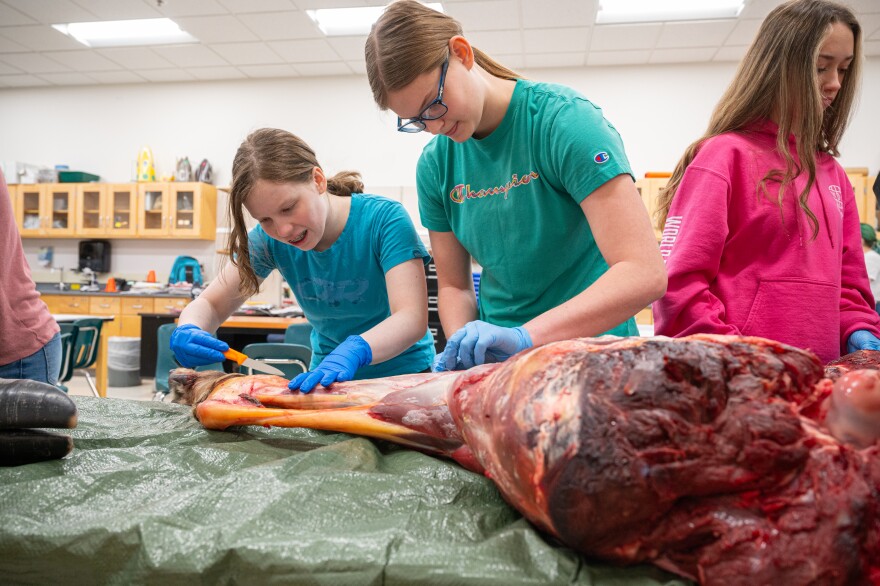
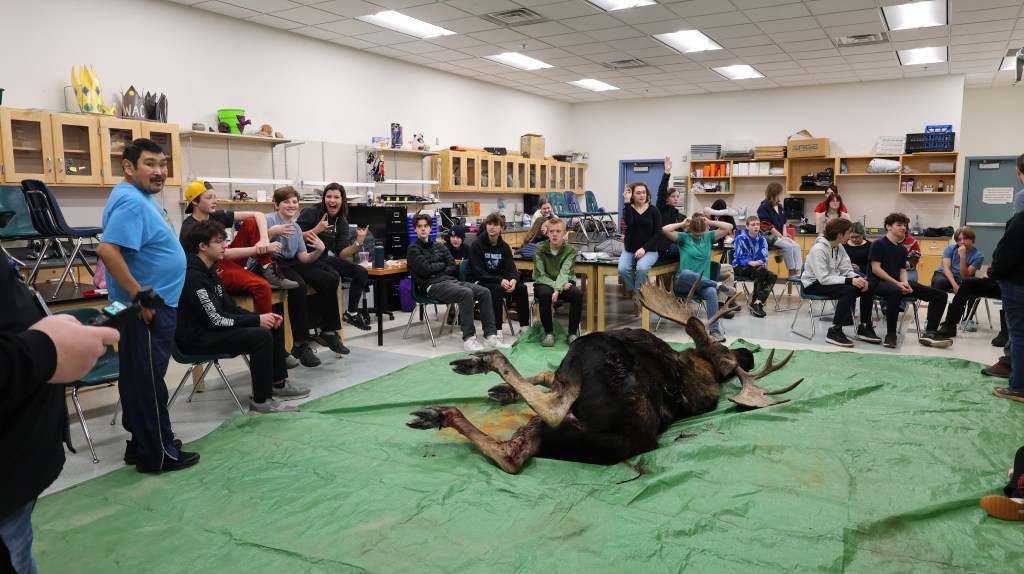
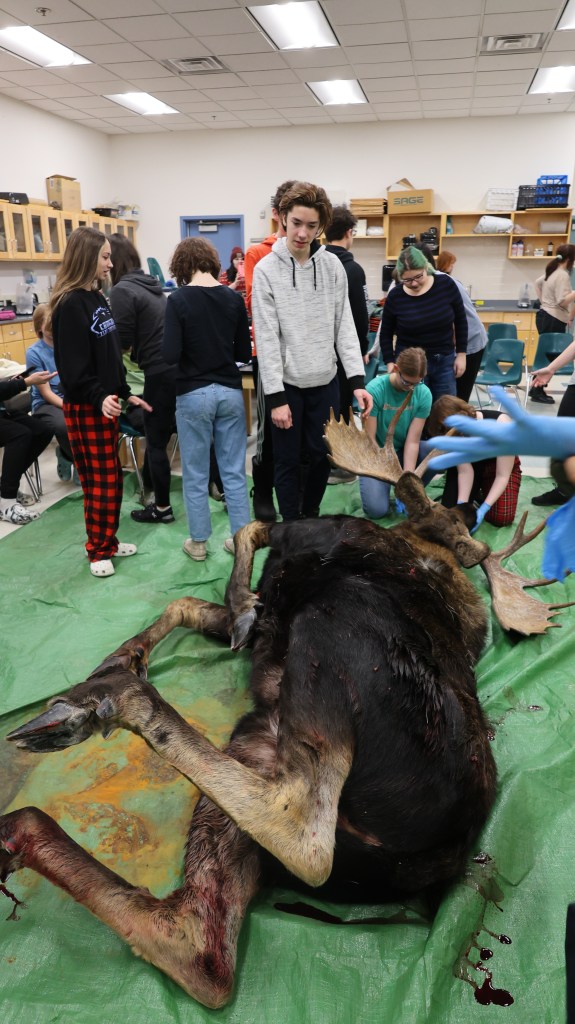
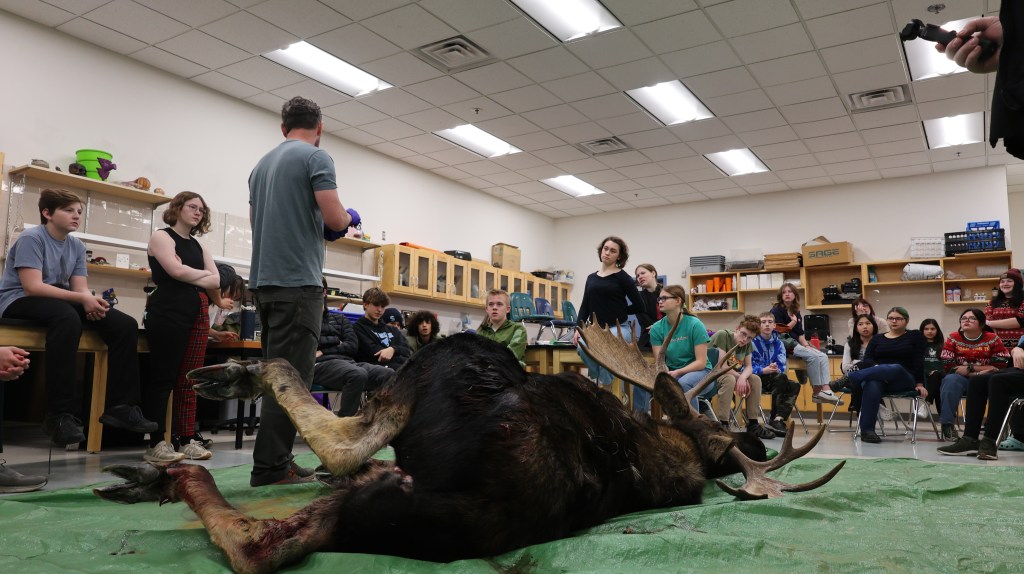
A Chugiak High School classroom played host to a moose this month, and though it entered intact, the ungulate left in pieces.
The bull moose was the star of a lesson plan featuring instruction on butchering and processing game animals, and the significance behind those activities.
Not every freshman biology class is as viscerally rooted in Alaska culture, but their teacher, Brian Mason, had harvested the animal with an education permit. The number of these special hunting permits issued by the Alaska Department of Fish and Game quadrupled this year.
Mason grew up in Eagle River hunting, fishing and berrypicking with his family. But many students in his class, even at the northern edge of the Municipality of Anchorage, haven’t had those experiences.
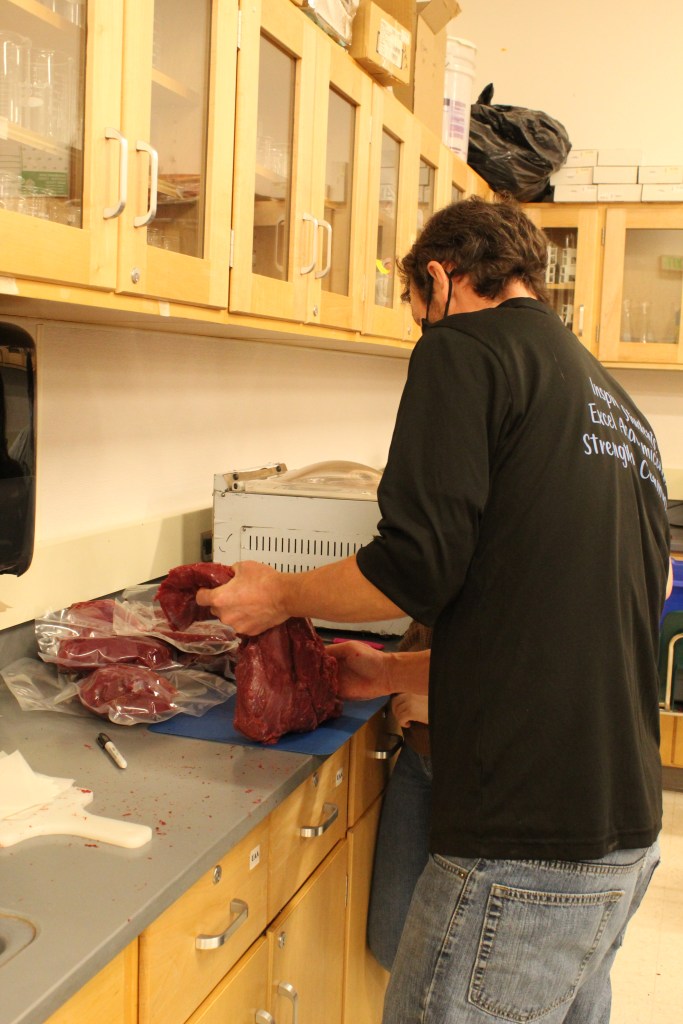
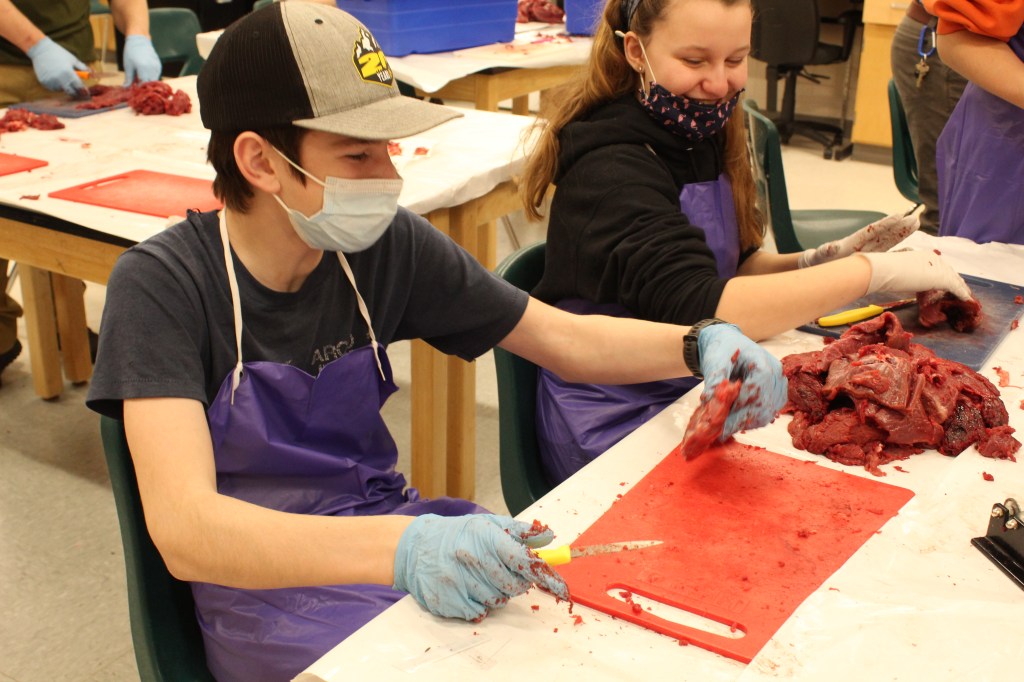
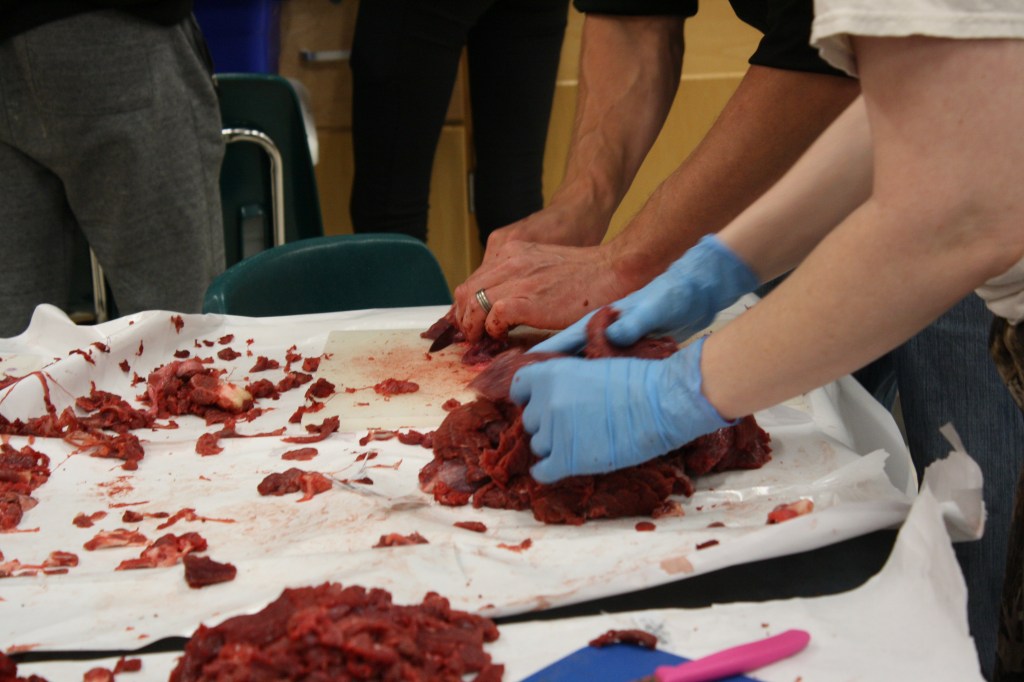
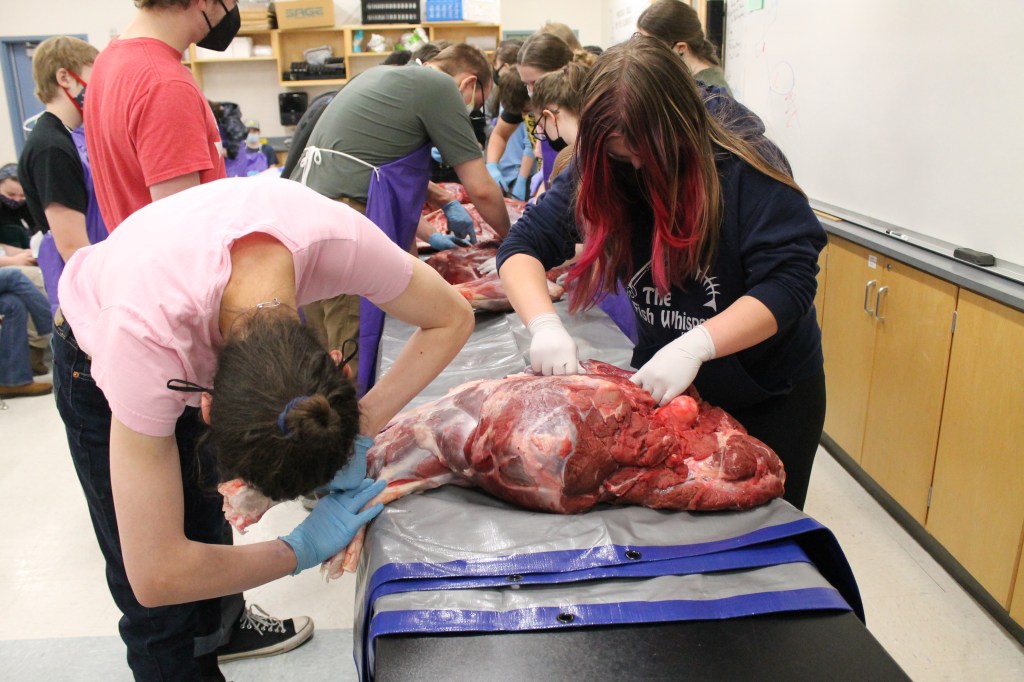
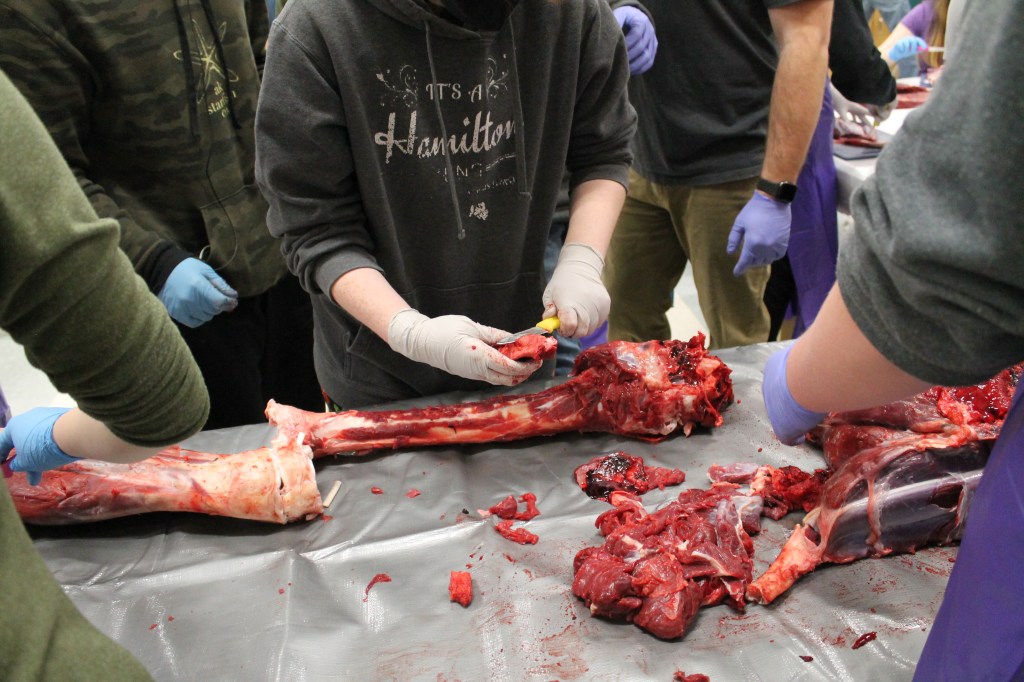
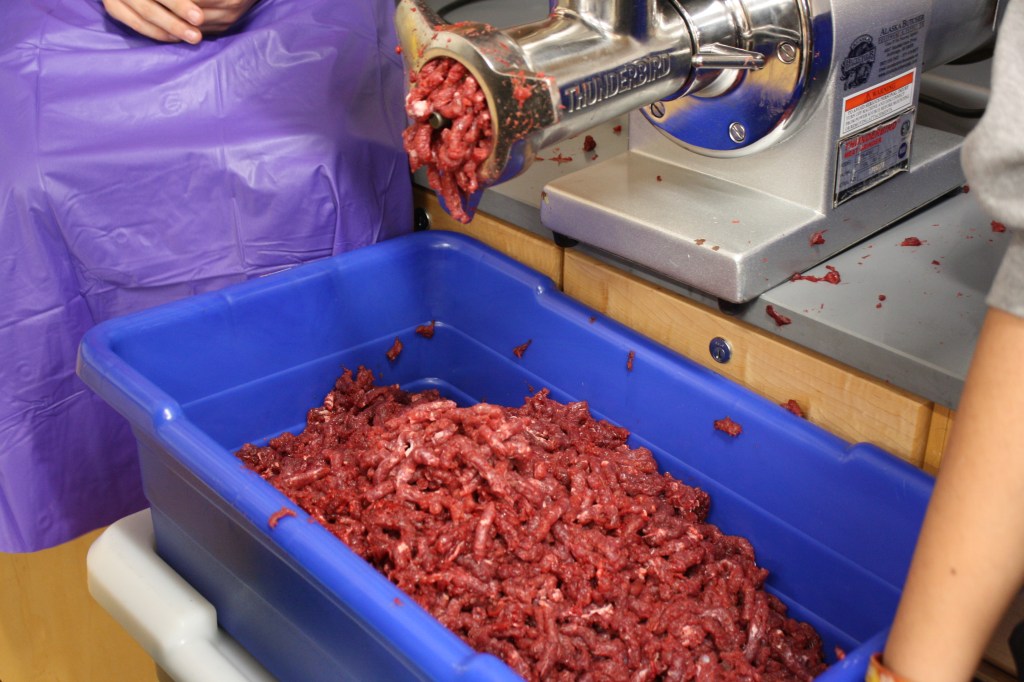
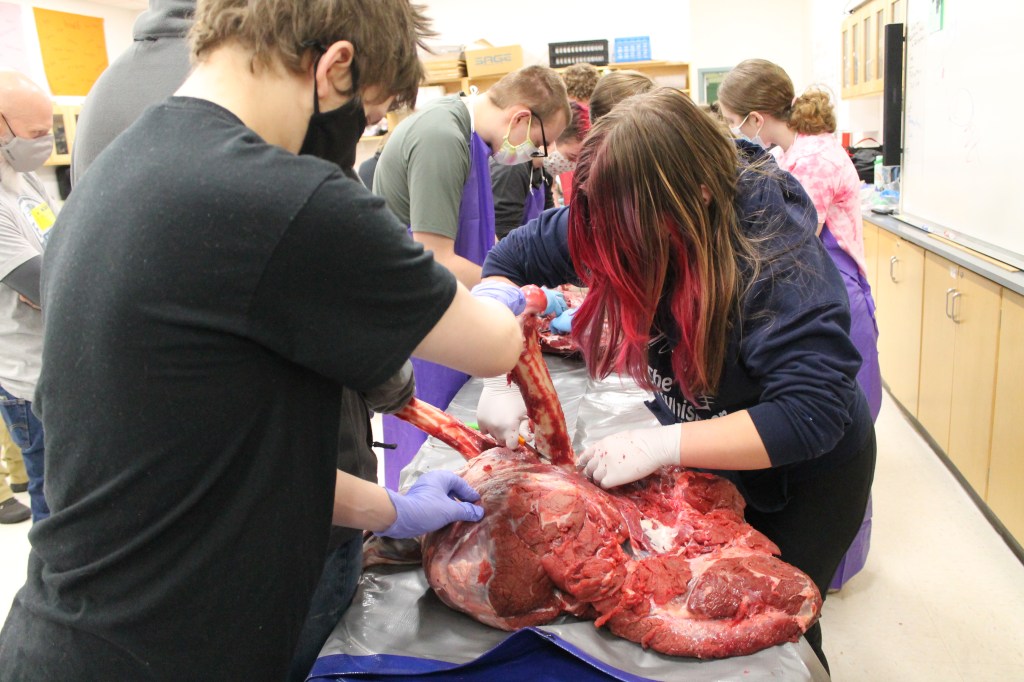
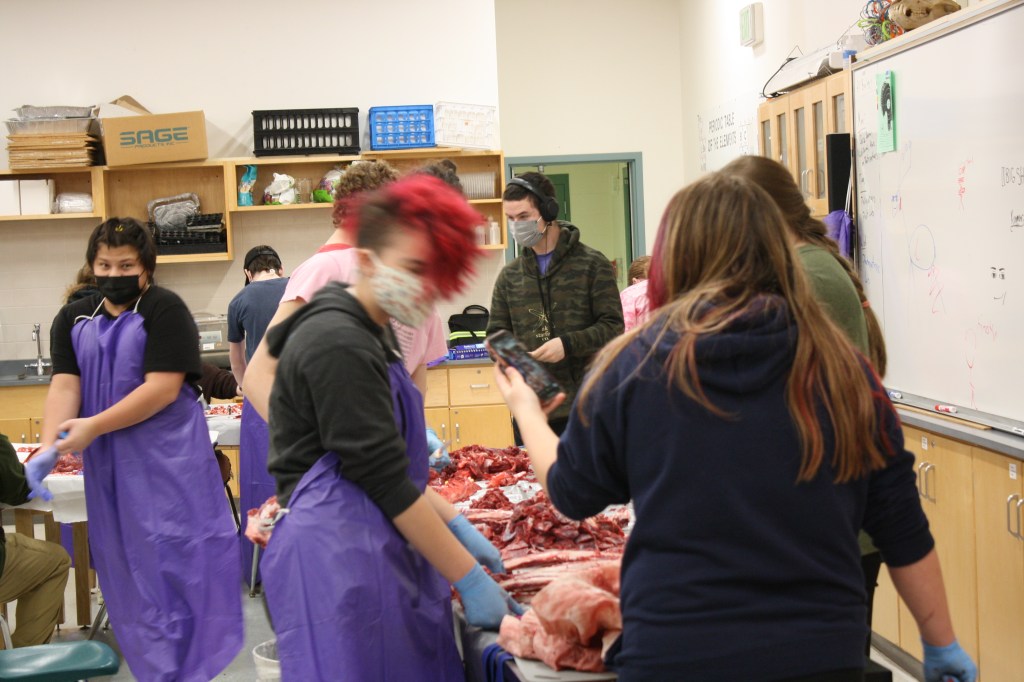
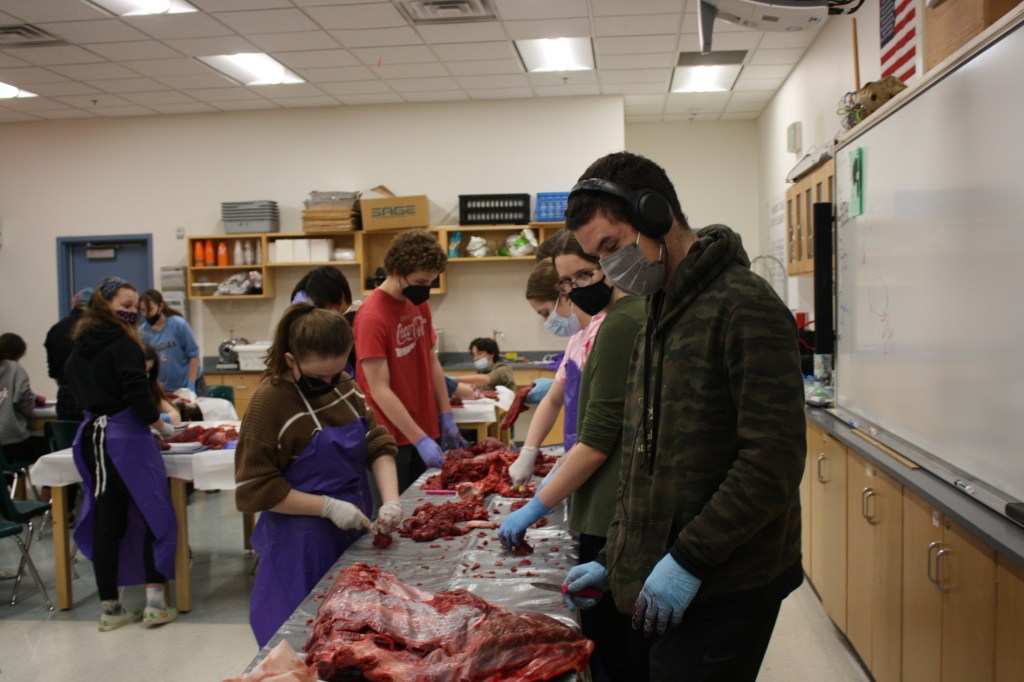
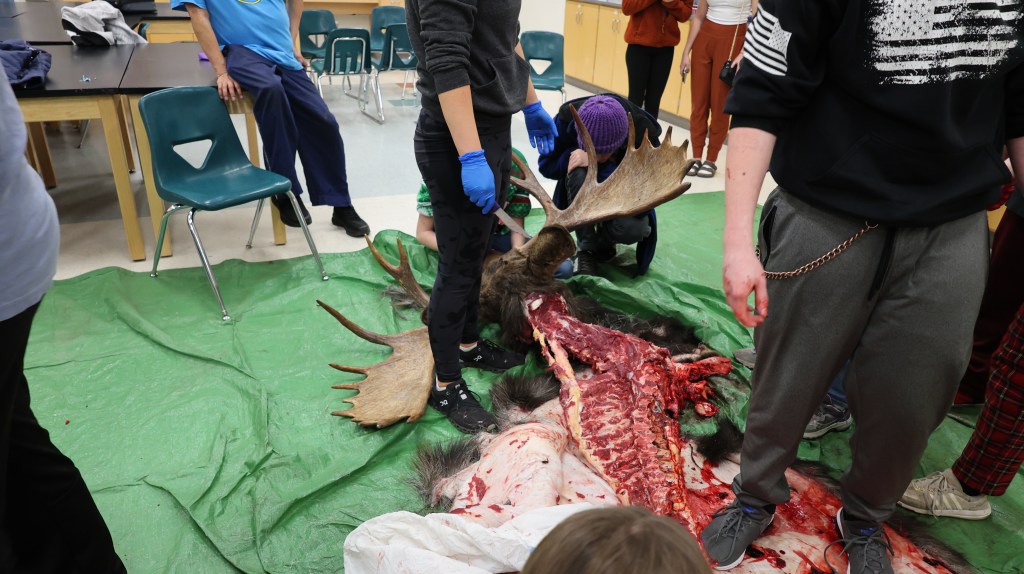
The class spent a couple days skinning, quartering and deboning the animal before trimming and grinding the meat into hamburger.
“It’s incredibly rewarding, first of all, just seeing the engagement of the students,” Mason said. “You know, on a day-to-day basis I’d like to think that my students are generally engaged in regular lessons, but the level of engagement is through the roof for this.”

Before the students even began skinning the moose, they heard from Indigenous Alaskans. That included Evon Peter from Arctic Village, an Indigenous studies professor at the University of Alaska Fairbanks, who told them about his cultural traditions when harvesting a moose.
“The best way to learn how to do something is to put your hands on it and to gain the experience, the experiential knowledge, so I told them not to be scared or be shy,” Peter said. “I think there’s real deep life lessons related to understanding that, as human beings, we’re part of nature and we’re interconnected with it and dependent on it.”
That resonated for 14-year-old student Jeremiah Haas.
“The most important thing for doing this is respecting the animal because it gave its life for us,” Haas said. “That way we can enjoy it and give it to people who don’t really have access to that much food.”
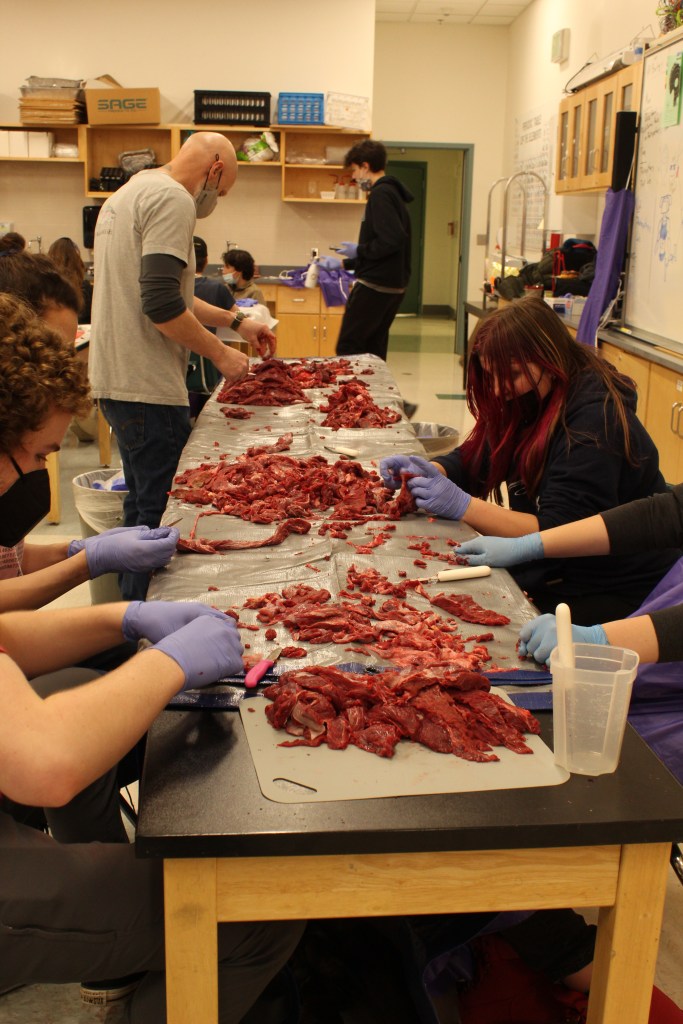
Haas and the other students in Mason’s class spent most of a recent morning trimming meat away from one of the hind quarters.
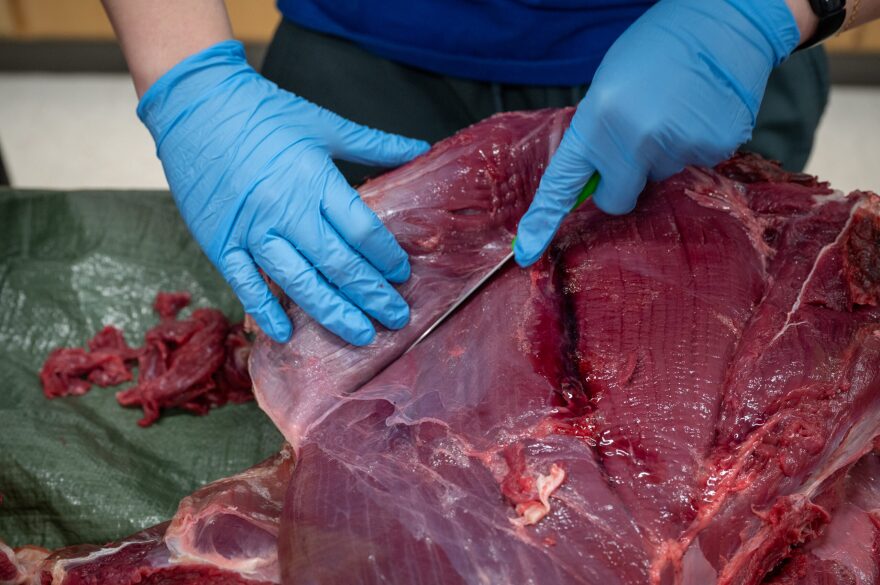
“I was very excited for this, because the closest thing I’ve ever had to hunting was just dipnetting with fish. I’ve never actually gone moose hunting before, so taking this apart is actually kind of cool,” Haas said.
Eventually, the moose was neatly broken down into 244 individual packages weighing about 400 pounds total. Students also took home one package each, and the rest was donated to families in the community.
Haas and the rest of his classmates are taking biology and a class called Alaska Studies concurrently.
It allows for a unique blend of lessons, from anatomy to cultural practices, which included conversations with elders, who told the students about how they honor harvested animals and share the meat with their entire village, Mason said.
”So this is an opportunity to kind of combine those sometimes disparate worlds into a single lesson,” he said.
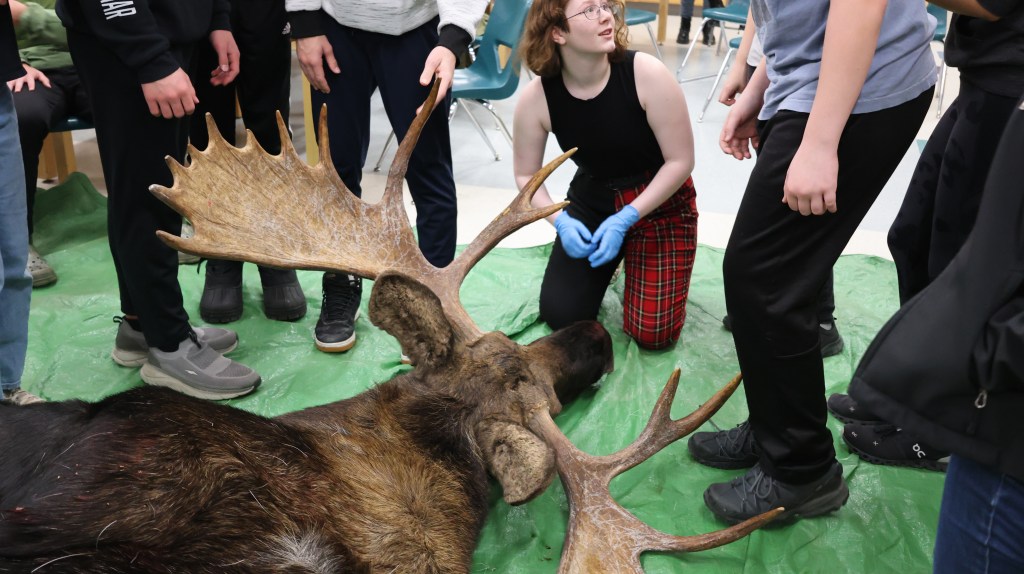
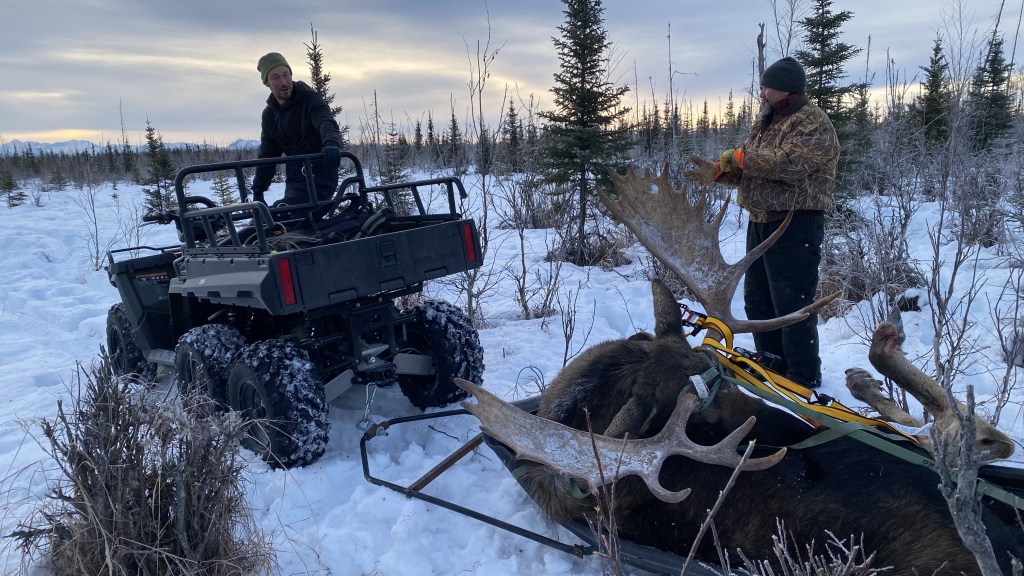
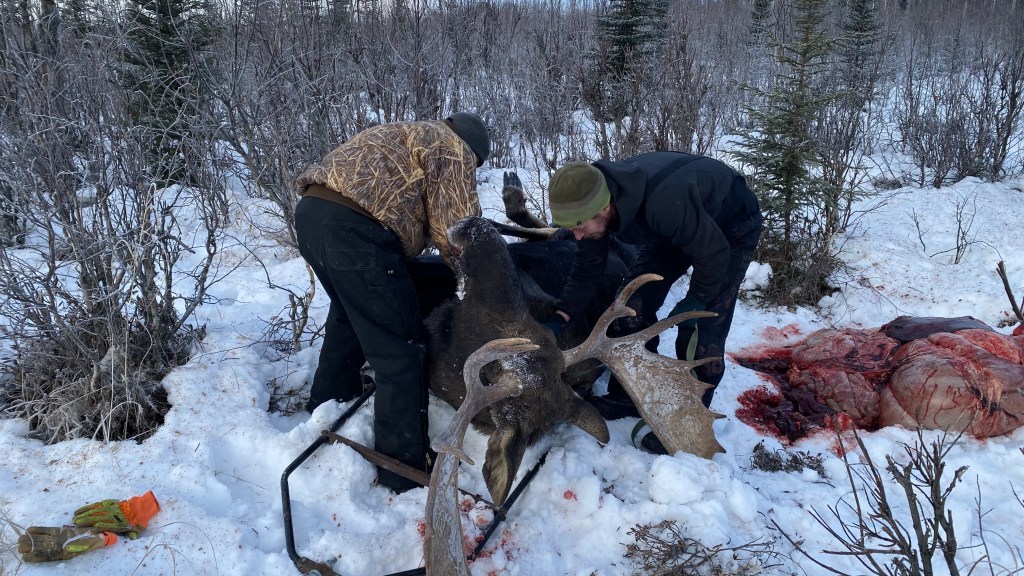
This is the third time Mason has harvested a moose on a cultural education permit, though the first time he’d brought an entire moose into the classroom. He shot the bull, which had antlers spanning 52 inches, near Big Lake on Dec. 3.
The Alaska Department of Fish and Game began issuing educational permits in 1995. They allow for the harvest of nine different types of game animals, according to Alaska Administrative Code, “for the teaching and preservation of historic or traditional Alaskan cultural practices, knowledge, and values.”
Ryan Scott, acting director of the state Division of Wildlife Conservation, said the permits are primarily aimed at creating educational opportunities, not necessarily to provide students or their families with game meat.
“To actually have the ability to put your hands on an animal while you’re processing it just reinforces that knowledge and that connection, much more than just being talked at in a lecture setting or something like that,” Scott said.
And there is apparently growing interest in the cultural education hunting permits.
Last year, the division says, it only issued 10 of them. In 2023, that number exploded to 41. The permits are most popular on the Kenai Peninsula but have also been issued in the Northeast Arctic, Interior and in Southwest Alaska.
The Chugiak High moose was popular on social media, too.
Before the students’ work was done, a video from earlier in the week showing the lifeless animal getting rolled into the school had more than 8,000 shares and 800 comments on Facebook.
Mason, the teacher, said most of the commenters were voicing their support for the class project.
“There were a lot of people that said something along the lines of, ‘Finally the teachers are teaching worthwhile things,’ or, ‘Finally they’re doing something great in schools,’” he said. “And the reality is there is so much good happening in our public schools every day in every classroom.”
From ASD:
Harvest Information
On Monday, December 4th, our students from Chugiak High School started their day with a message from Evon Peters. Evon is an Alaska Native leader originally from Arctic Village who shared his experiences and cultural traditions of honoring an animal’s life and sacrifice. Our students learned the importance of showing respect for such a life and the energy it will provide for those it feeds. After the conversation, the students then proceeded to field dress a bull moose that was harvested by Biology teacher Brian Mason via an educational harvest permit from the Alaska Department of Fish and Game. This incredible and uniquely Alaskan hands-on experience was organized by Chugiak High School’s Alaska Strong Coordinator, Ralph Elook, and Indigenous Education Student Support Specialist, Crystal Wendell. The Anchorage School District (ASD) thanks our community for supporting culturally responsive student learning.
An article from ADN on the 2019 Harvest:
A Chugiak High teacher hunted a moose and brought it to school. Then things got interesting.
By Matt Tunseth
Published: December 15, 2019

Students in Brian Mason’s class at Chugiak High School didn’t ace their big test last week. They butchered it.
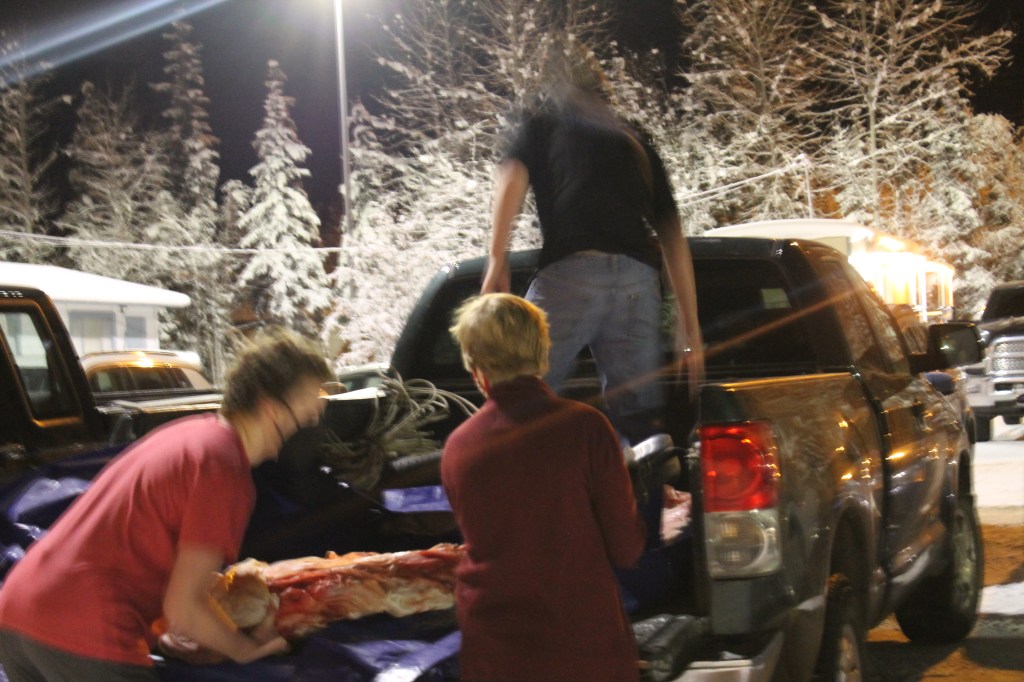
Mason brought a cow moose carcass to class in the back of his pickup truck that morning, and for the rest of the day his students went to work de-boning, separating, grinding and packaging the animal. The bloody business served as a way to immerse the World Discovery Seminar program students in Alaska cultural traditions, give them a basic understanding of anatomy and teach them practical life skills.
“What I try to emphasize — and the World Discovery Seminar program as a whole — is to emphasize experiential learning,” he said as nearly 30 of his students used thin knives to slice up the carcass. “You can learn certainly about anatomy from diagrams and textbooks and videos but getting your hands on an animal is a big part of the science aspect of it.”
Advertisement
The World Discovery Seminar (WDS) program is a “school within a school” at Chugiak whose goal is to “establish a smaller learning community that creates a sense of identity, belonging, and teamwork within the WDS program, while maintaining strong ties to the CHS families of departments and programs,” according to the CHS website.
Around 125 students are participating in WDS, which has four teachers devoted to the program. The program uses the “Paidea” method, which emphasizes Socratic learning, in-depth learning and hands-on activities to get students to become “multifaceted thinkers.”
Ryley Edwards said the hands-on nature of the program gives she and her WDS classmates a better insight into what they’re studying.
“We do a lot of things that are more interactive than other classes,” she said. “It’s more fun for learning stuff instead of just on paper.”
Although it’s common for students to participate in unique projects, Tuesday’s moose butchering class was unusual even for the WDS program. Mason said he obtained a special Cultural Educational Harvest Permit from the Alaska Department of Fish and Game, which allows for the harvest of game animals for educational reasons.
Tim Spivey with the Alaska Department of Fish and Game said about 30-40 such permits are issued each year, mostly to schools and villages. Most are for moose, though a few are for caribou or deer; black bears, fur bearers and even mountain goats can be harvested, but Spivey said there are strict conditions on the permits.
“We don’t just issue these Cultural Education Permits to anyone,” he said.
Applicants must fill out an online application and must propose a systematic program that can teach students aspects of traditional Alaska practical knowledge and values. Any harvest may not result in a significant reduction in populations or take away opportunities from other hunters. Once Mason’s permit was received, Spivey said he contacted Tim Peltier, the area management biologist for the Mat-Su area, to see if harvest was possible.
“He told me we didn’t have a concern with them taking an additional moose,” Spivey said.


Limits were placed on the type of moose Mason could shoot: it had to be an antlerless moose and couldn’t be a calf or a cow with a calf. After killing the moose, Mason was also required to submit a report to Peltier including the age, sex, specific harvest location and who shot the moose. Spivey said Mason will also be required to file a report 30 days after the hunt detailing the educational or cultural program activities that took place and other pertinent details or problems encountered.
Spivey said the program is a way of allowing educators and elders to use Alaska’s game populations to pass on cultural traditions and practices related to hunting and gathering in the state.
“Those aspects are huge for Alaska,” he said.


Finding and shooting the animal wasn’t easy. Due to low snow conditions, Mason said it took him three weekends of hunting before he finally shot the young cow moose in a swampy area near Willow.
“The goal was to also learn the skinning and quartering process, but unfortunately I wasn’t able to get the moose out of the woods whole,” he said.
However, the students were able to learn how to debone, trim and process the meat in a clean and safe way. That meant giving them a brief lesson on moose anatomy before handing out gloves and 4-inch deboning knives to start cutting under the supervision of Mason and a couple parent volunteers.
“If you wouldn’t want it on your steak, you don’t want it on the meat,” he told them.


Mason said he was initially worried about how his students would react to the lesson, which required them to both deal with graphic subject matter and be responsible with dangerous tools. But once the cutting started, the class became silent, focused and extremely occupied with the task at hand.
“They’re all being super safe and responsible and frankly they’re really engaged,” he said. “I wasn’t sure how some students would really deal with the process of getting their hands on a dead animal, that can be an off-putting experience for some students, but I’ve been really impressed with them.”
Student Reuben Dobson said students understood the trust Mason was putting in them by allowing them to use the sharp knives in class.
“I think our teacher knew we’re here to learn and we weren’t going to be stupid,” he said.
There were some squeamish moments early in the lesson. While showing the students how to separate the moose’s hoof from the rest of its leg, Mason warned there would be a somewhat sickening sound — then demonstrated that sound by snapping the hoof off with a loud crack. Some students squirmed in their seats.
ADVERTISEMENT
“Talk about a wake-up call,” said student Jasmine McLean.
McLean said the moment gave her pause.
“You think it’s going to be okay and then you do that and it’s like, ‘It’s not going to be that easy,’” she said.

However, once McLean started cutting she proved a fast learner, probing through cartilage and meat as she expertly cut meat from bone.
“It’s easier to process once you get more into it,” she said.
As the lesson wore on, students sat at tables removing fat, tendons, bone, hair and any dirt or debris from the meat. With so many working on the animal, the butchering actually went remarkable fast.
“I need this many people to help with my moose,” quipped Chugiak vice principal Ben Johrendt, one of several curious administrators and teachers who popped into the classroom throughout the day.
After butchering the meat, the students then ground some and packaged steaks using equipment donated by Alaska Butcher Supply. He said students processed about 200 pounds of moose meat, some of which they’ll cook and eat at a special dinner and the rest which will be donated to charity.
ADVERTISEMENT
Mason said he thinks turning his class into a temporary slaughterhouse was a success. In addition to learning more about animal anatomy, his students also an immersive experience in Alaska culture and traditions.
“I think that certain experiences you can’t really learn from a textbook.”

There is also an awesome video on the original post for this article:
(It’s so weird to see these now grown up and graduated students again as freshmen!!)
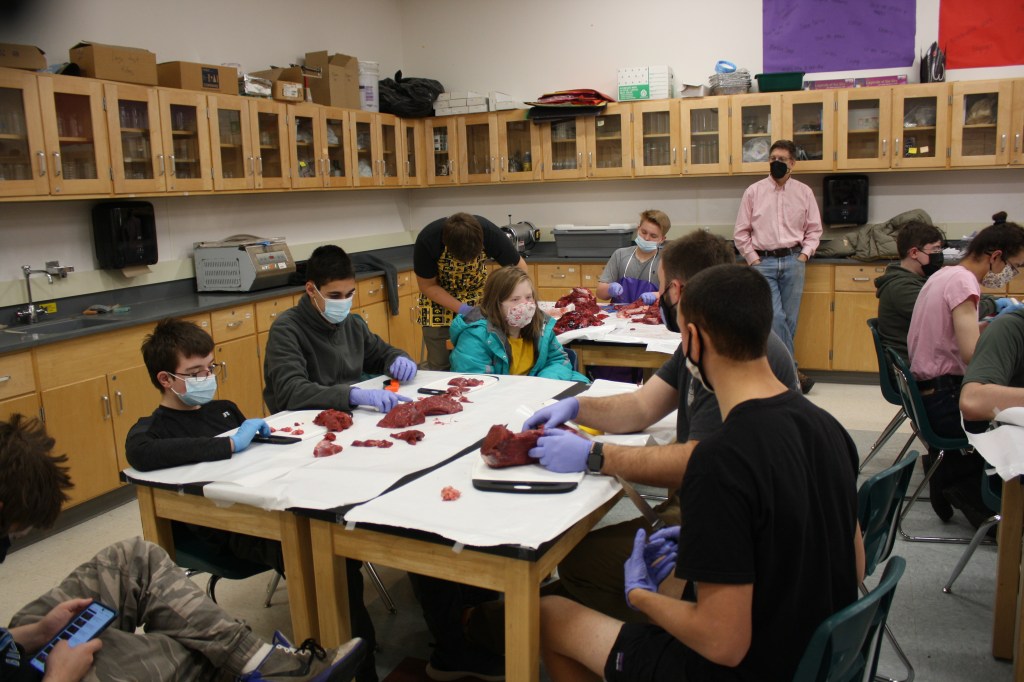
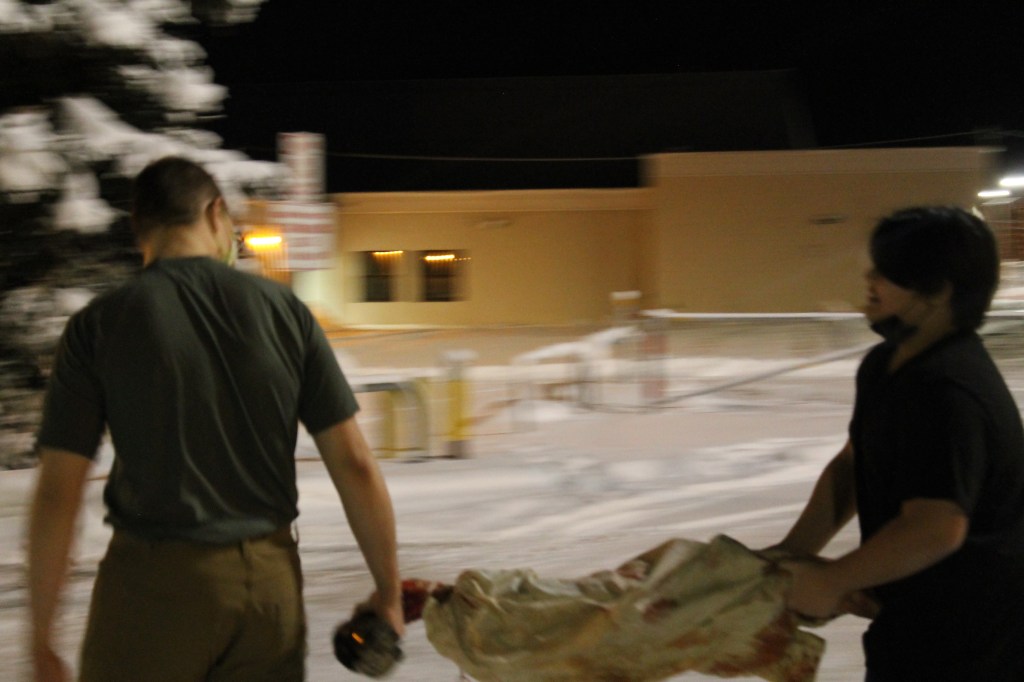
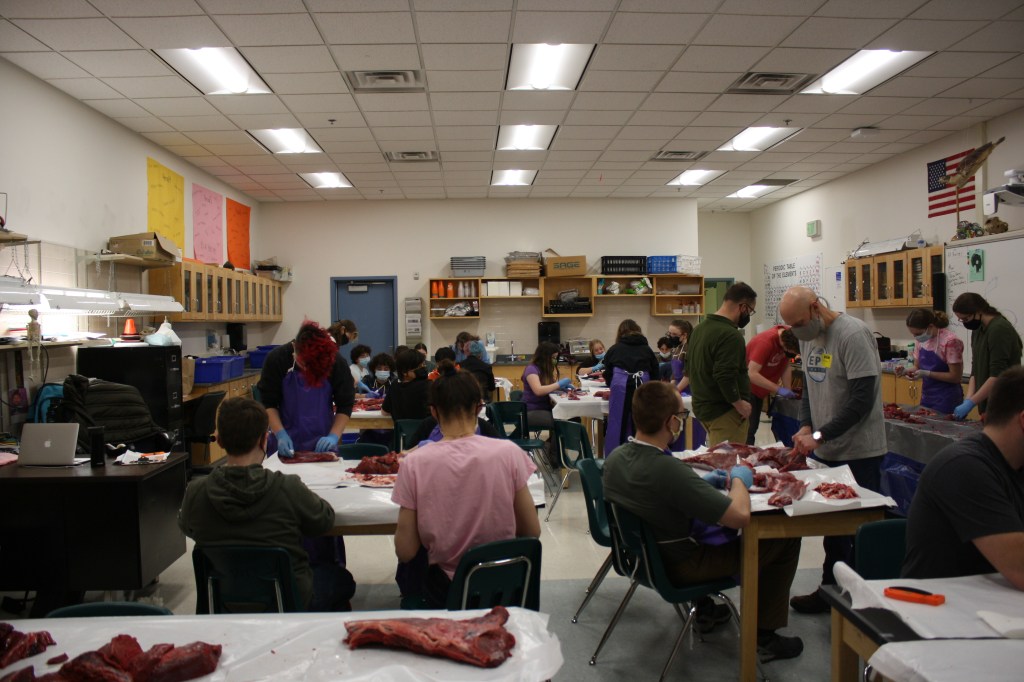
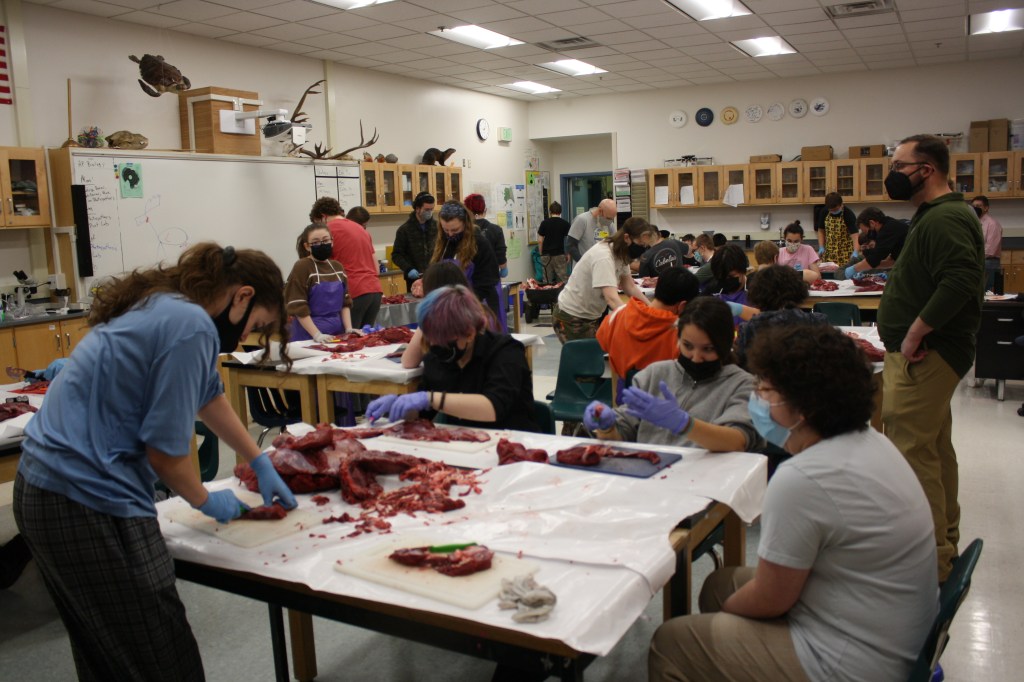
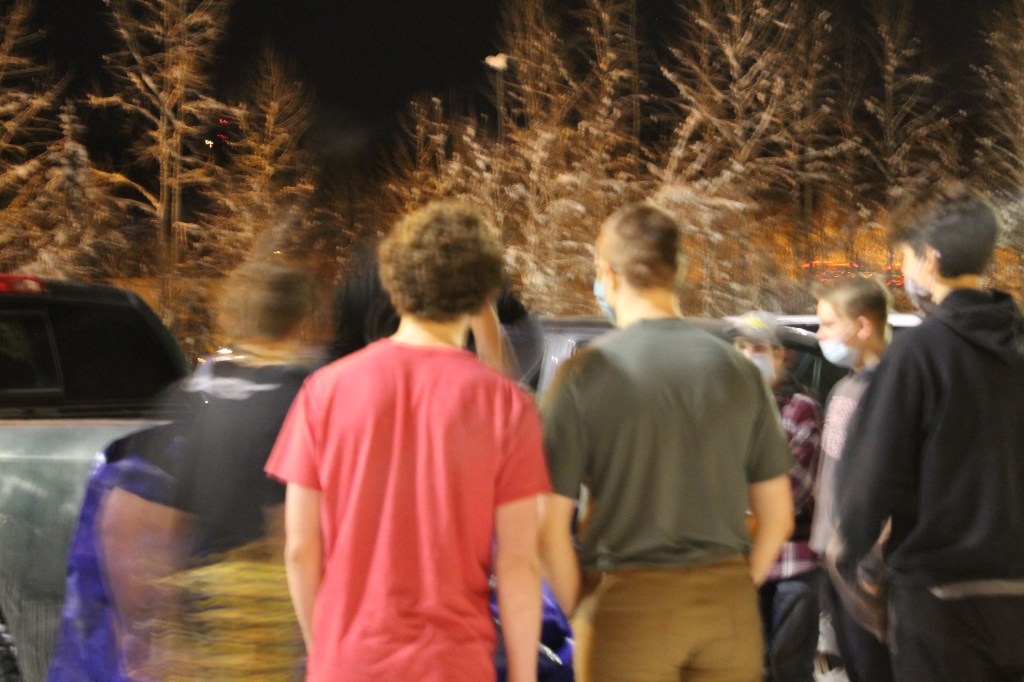
Photos from the 2021 Harvest, by Chugiak yearbook:












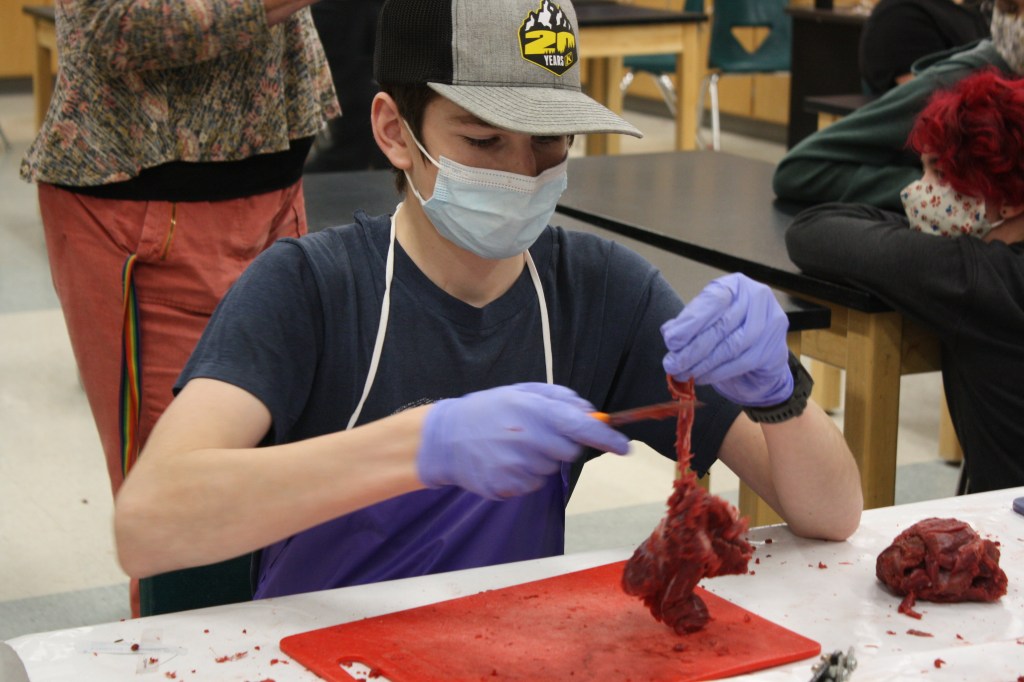

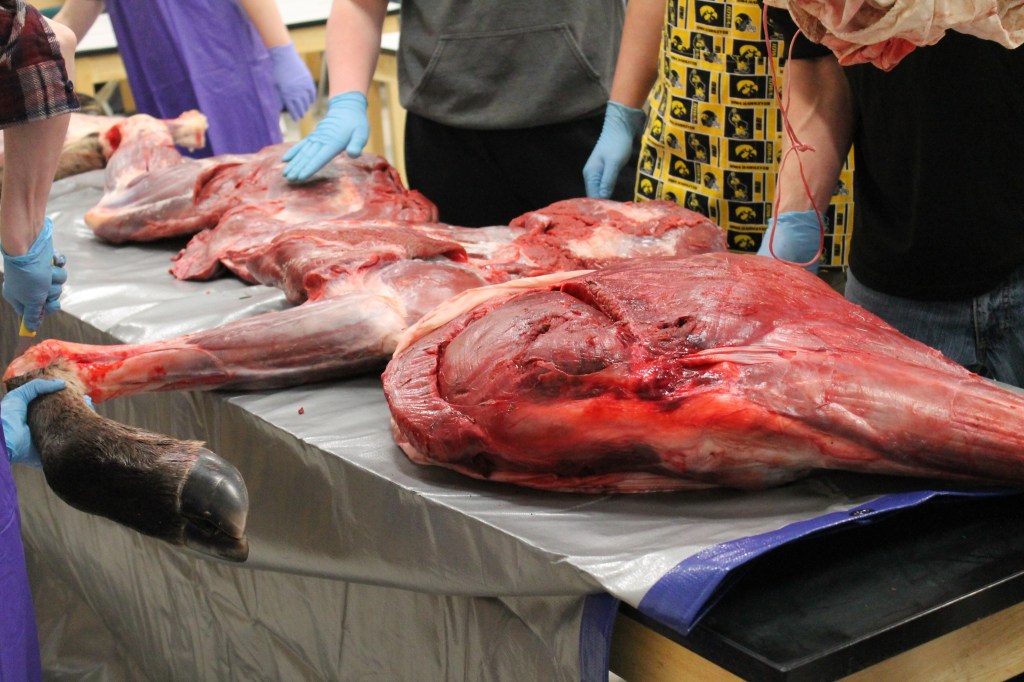

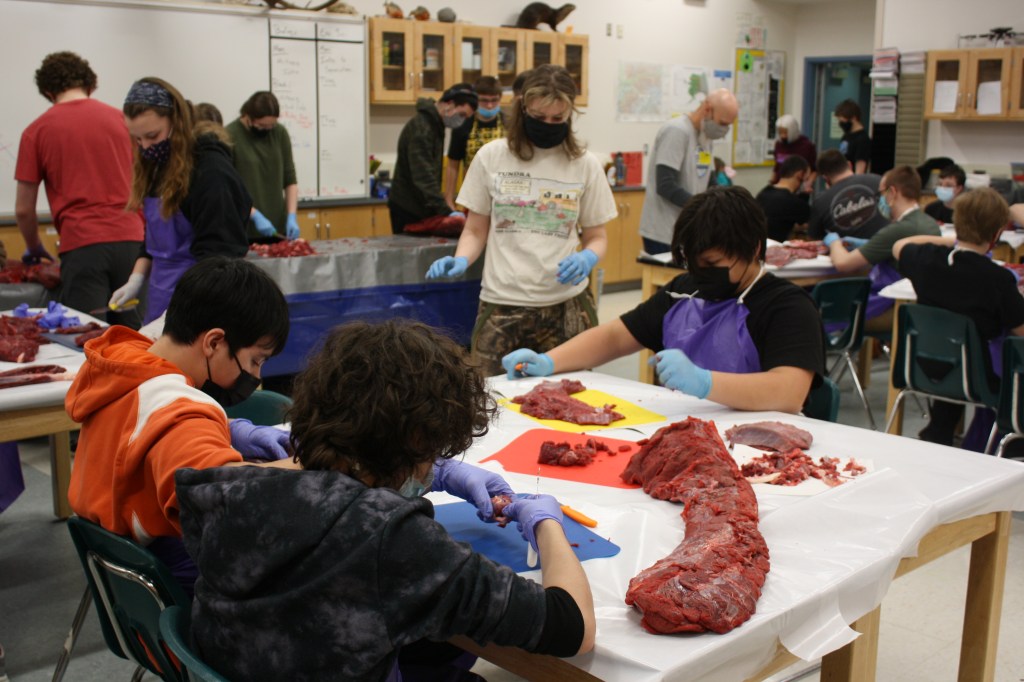


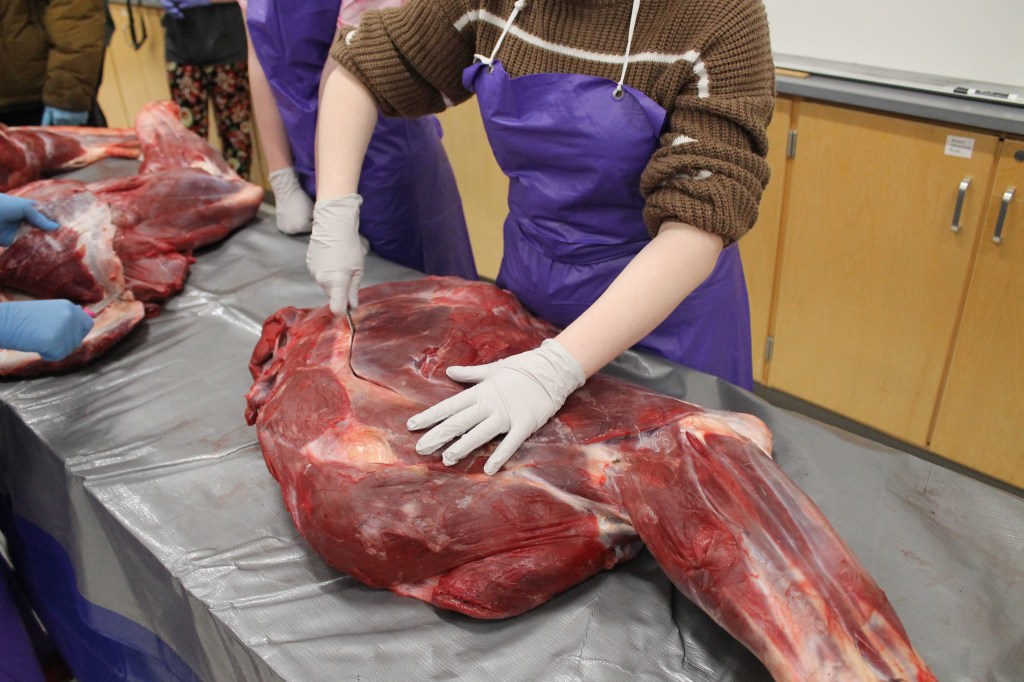
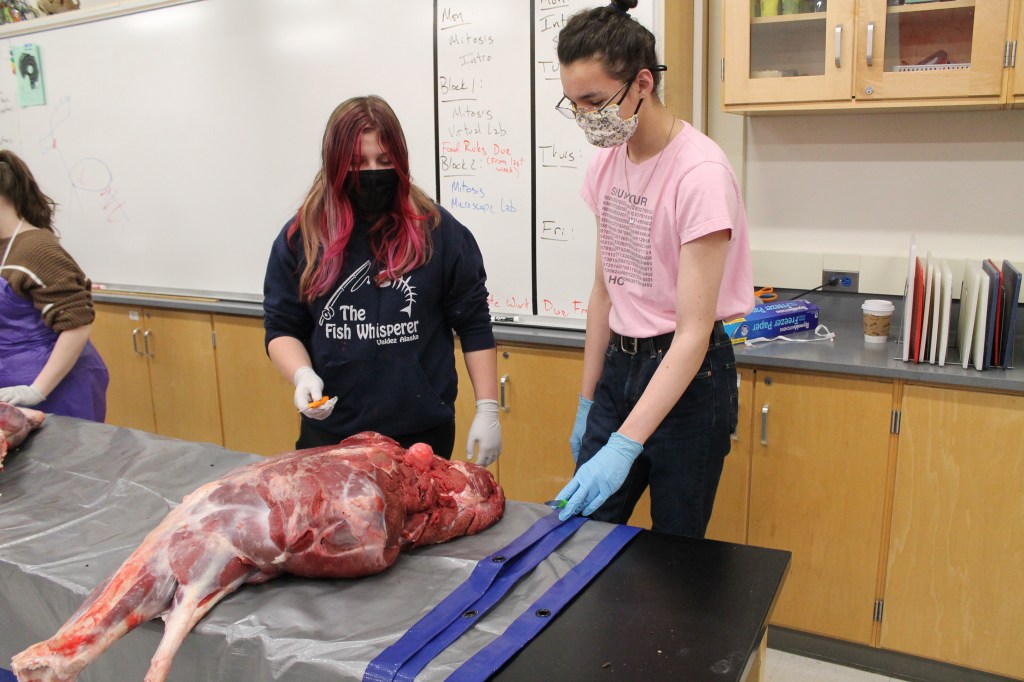


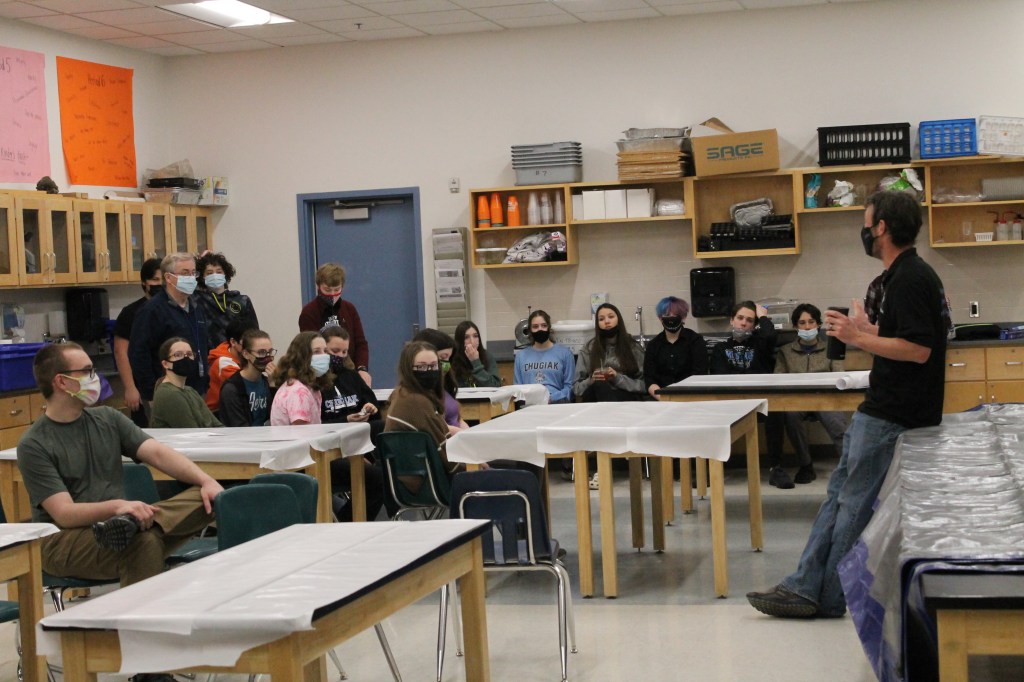


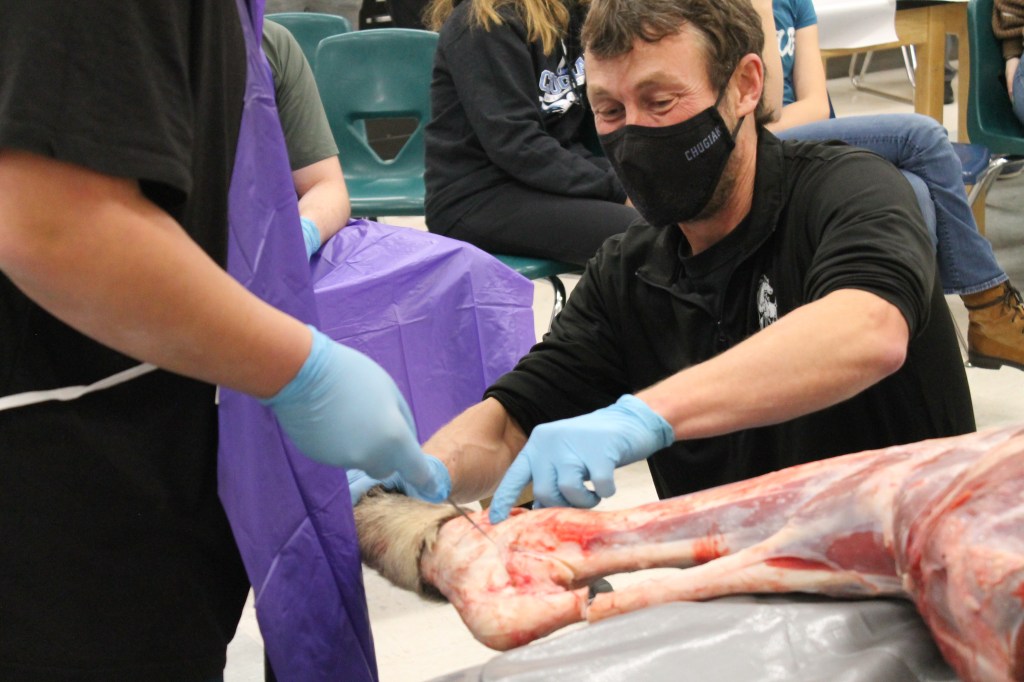
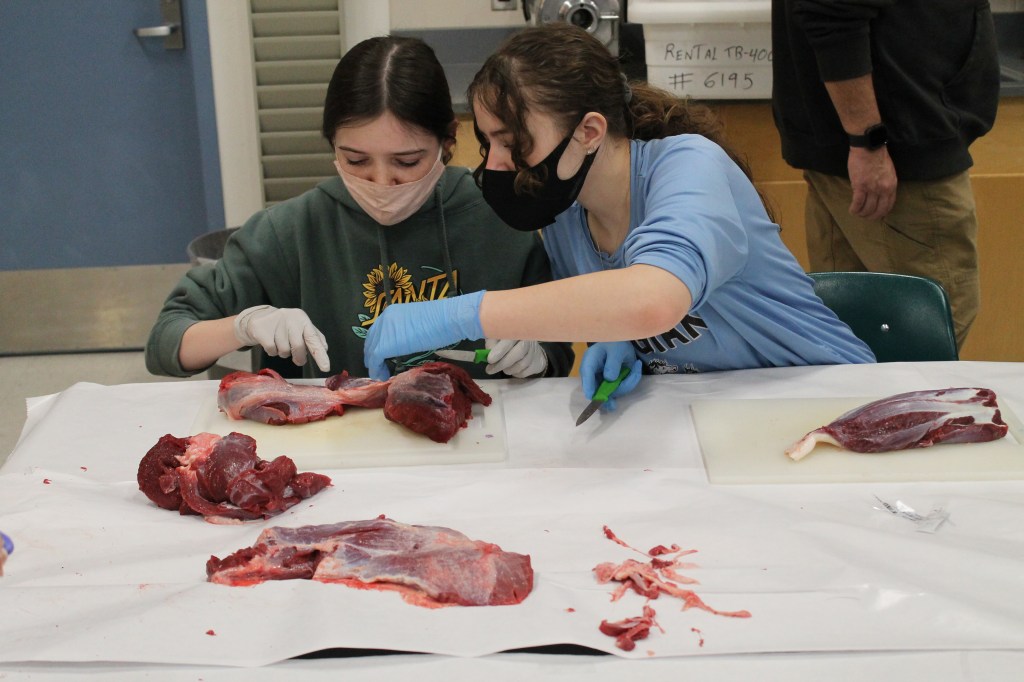


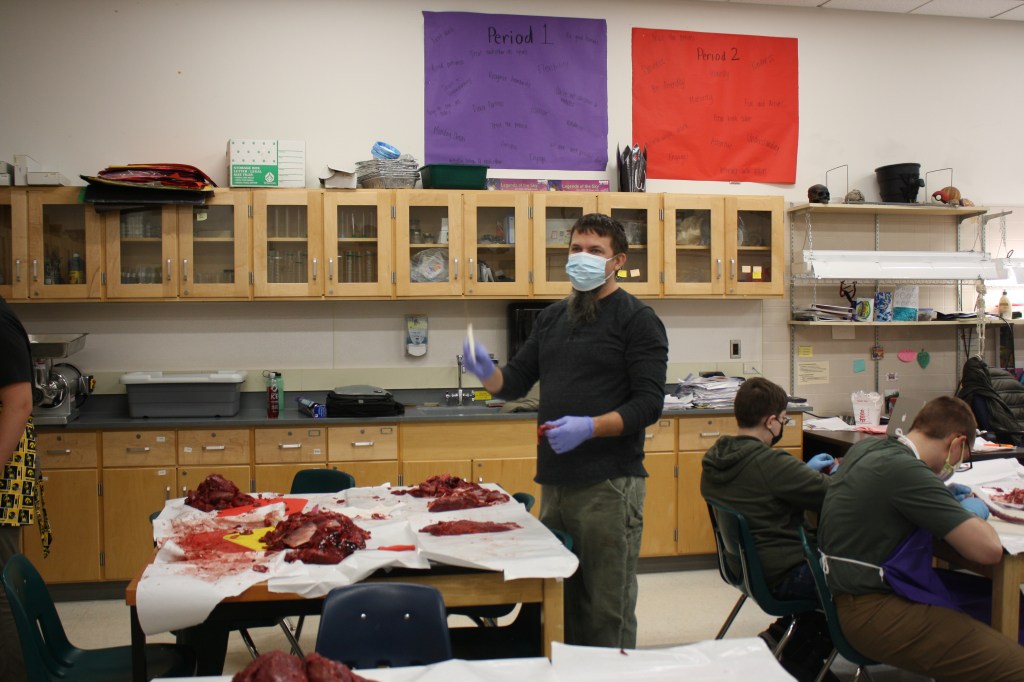

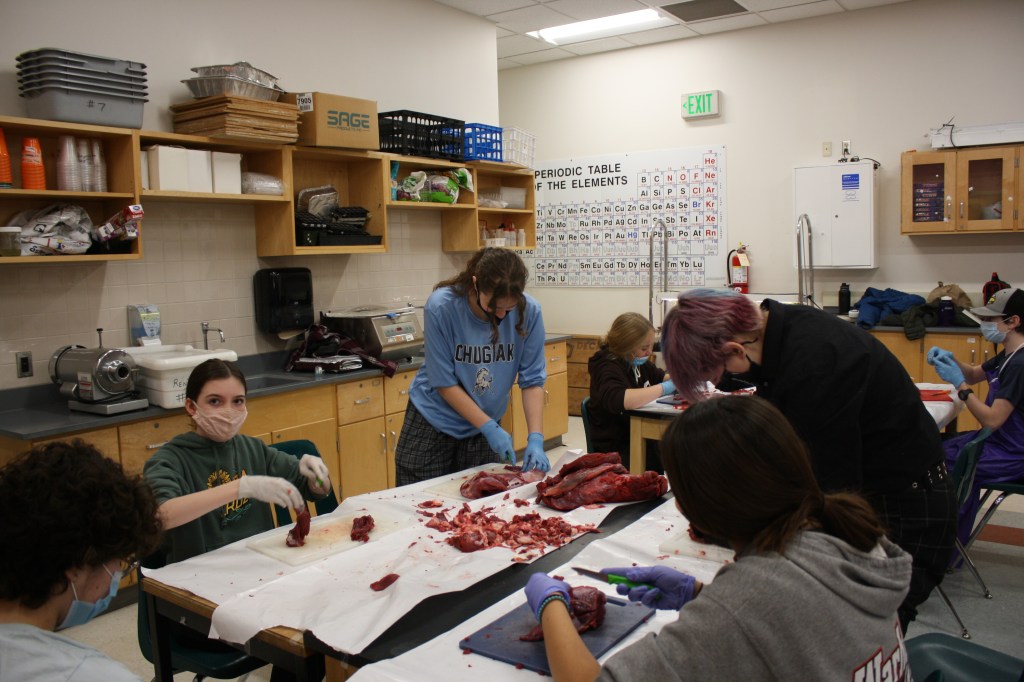
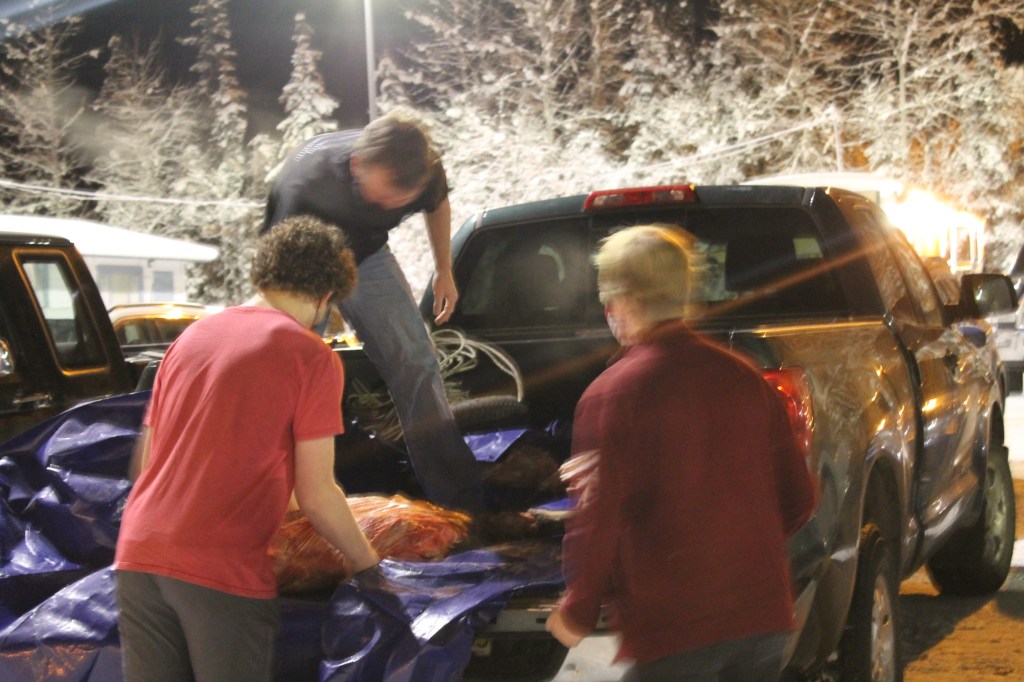

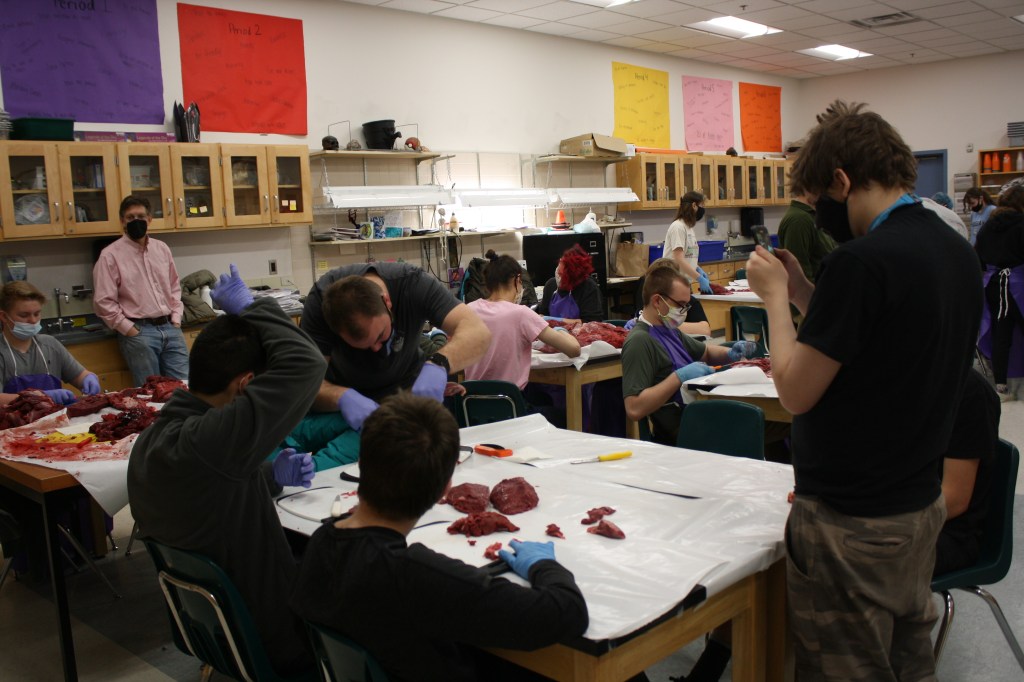

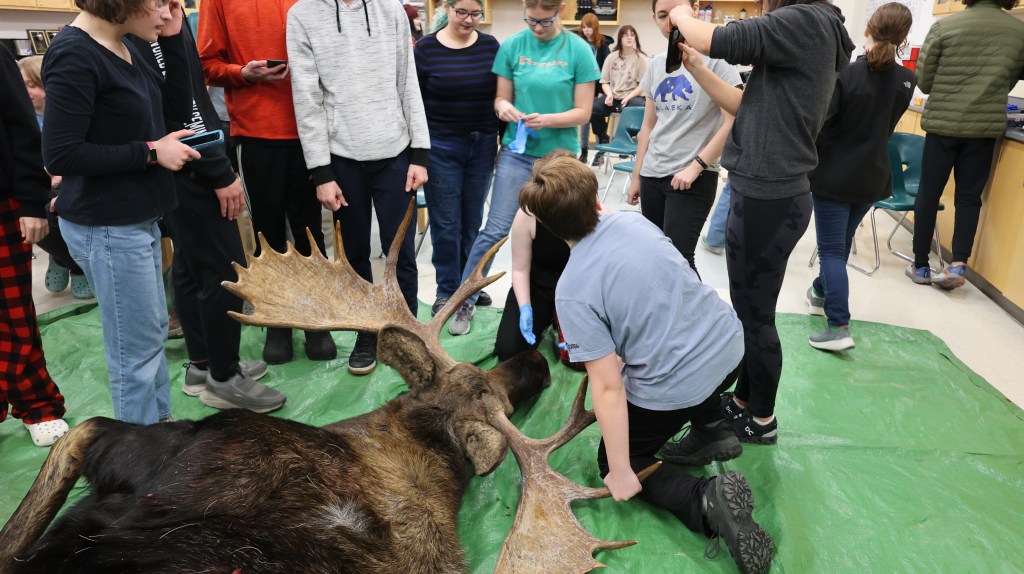
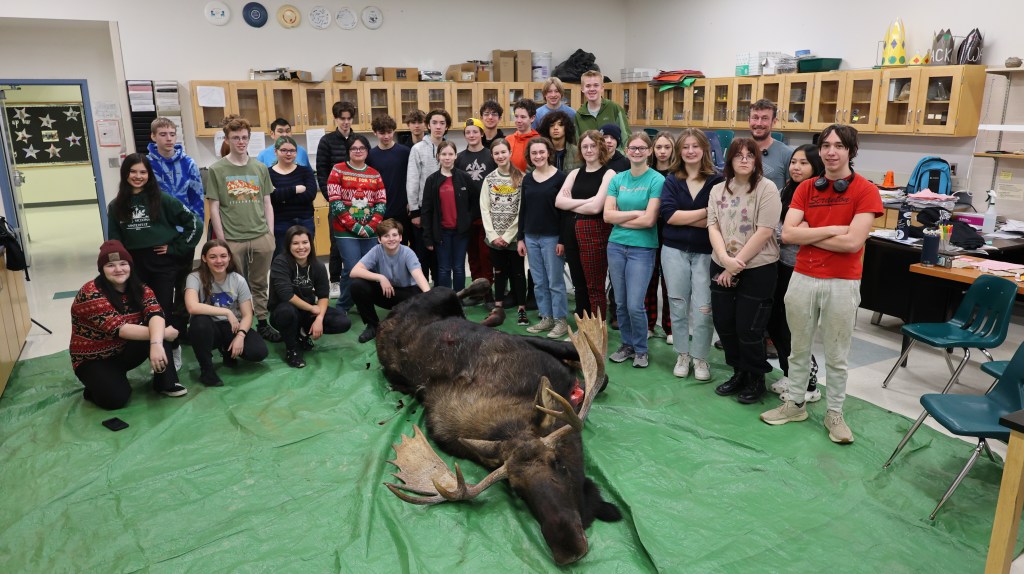
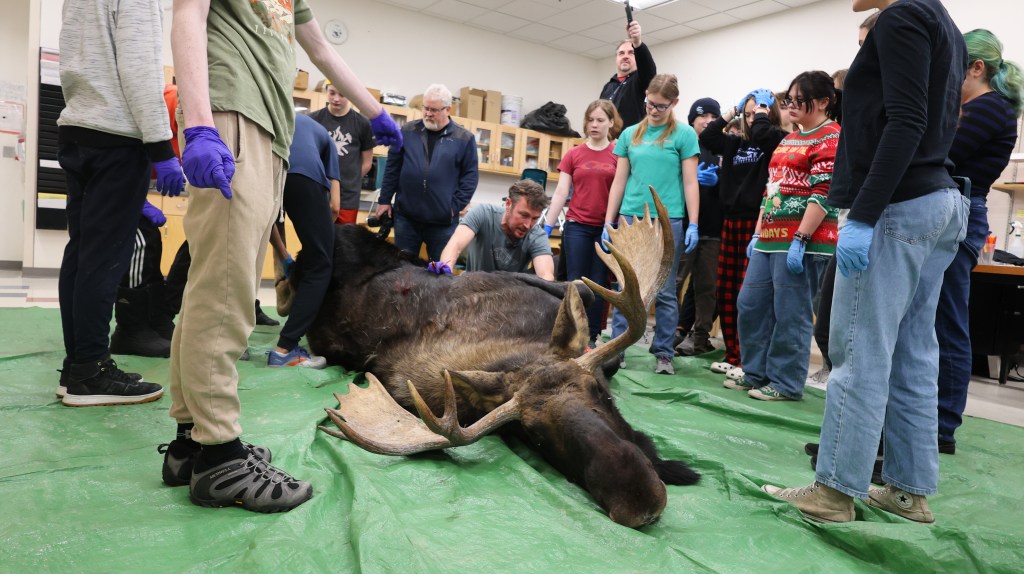
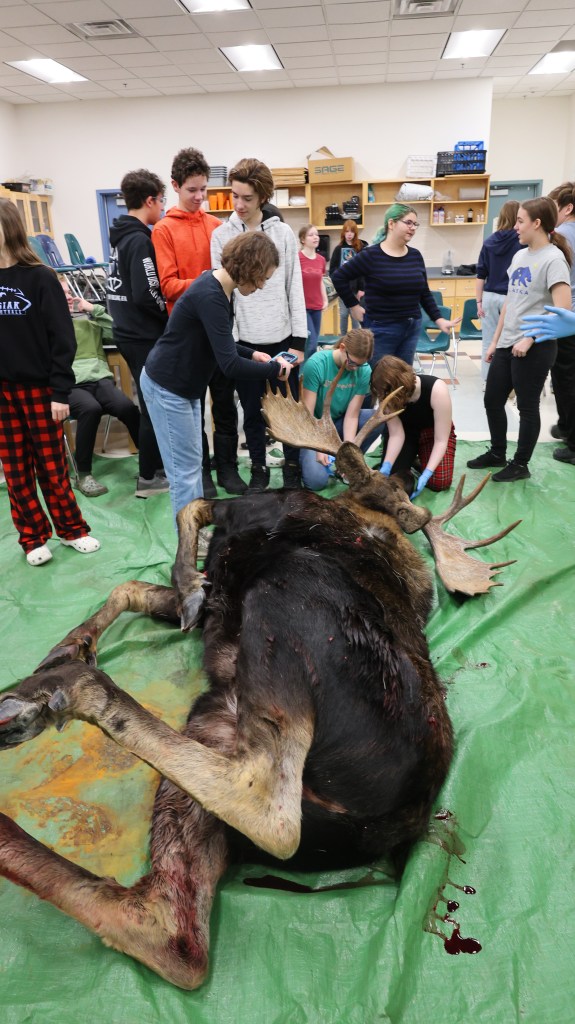
Photos from the 2023 Harvest, by Chugiak Yearbook:















 Chugiak World Discovery Seminar Program
Leave a comment